Short answer: At Fly Your Tech, building a SaaS product in India costs ₹2.5–4 lakh for a single-workflow SaaS with sign-in, subscriptions and a basic admin (6–8 weeks), ₹4.5–8 lakh for a multi-tenant SaaS with roles, onboarding, GST invoices and 2–3 integrations (8–12 weeks), and from ₹9 lakh (custom quote) for a larger platform with a customer API, analytics, a mobile app or AI features (12–16 weeks). All prices exclude 18% GST and third-party running costs such as hosting, payment-gateway fees and API usage.
If you only need to test whether people will use your idea, a focused MVP is cheaper. See our MVP development cost in India guide (₹1.2–3.5 lakh). This article is about the next step: a product that many paying customers log into.
SaaS development cost by stage
| Stage | What you get | FYT price (excl. GST) | Timeline |
|---|---|---|---|
| Starter: single-workflow SaaS | One core workflow, sign-up and login, subscriptions through Razorpay, basic admin panel | ₹2.5–4 L | 6–8 weeks |
| Growth: multi-tenant SaaS | Separate accounts (tenants) with their own users and data, roles and permissions, onboarding, GST invoices, 2–3 integrations | ₹4.5–8 L | 8–12 weeks |
| Advanced: SaaS platform | Everything in Growth plus a customer-facing API, analytics, a mobile app and/or AI features | From ₹9 L (custom quote) | 12–16 weeks |
Projects are fixed-scope with milestone payments of 40/40/20. Annual maintenance (AMC) is 12–15% of the build cost per year. You own the code and the data after the final payment.
Why a SaaS costs more than an MVP or a website
A SaaS is not one app for one business. It is one product that many businesses use at the same time, each paying you every month. That adds work you don't see in a normal website or internal tool:
1. Tenancy: keeping each customer's data apart. Every customer must see only their own leads, invoices or files. There are two common ways to do this. In a shared (multi-tenant) design, all customers sit in one app and one database, and every record carries a tenant ID. In an instance-per-customer design, each customer gets their own deployment. Shared is cheaper to run at scale; separate instances give stronger isolation and per-customer branding. The choice changes the build, so we fix it in scoping.
2. Subscriptions and billing. Plans, trials, coupons, upgrades, failed payments and GST invoices all need screens and backend logic. In India this usually means Razorpay subscriptions plus GST-compliant invoices.
3. Roles and permissions. An owner, a manager and a salesperson inside the same customer account need different access. Fine-grained permissions (for example "can view leads" vs "can create users") take time to design and test.
4. Onboarding. Self-serve sign-up, a first-run setup, importing existing data from Excel or Google Sheets, and email or WhatsApp notifications decide whether trial users stay.
5. Integrations. Payment gateways, WhatsApp, calling providers, Google Sheets or accounting tools. Each integration adds build and testing time, which is why Growth includes 2–3 and Advanced is quoted per integration.
6. Admin and support tools. You need your own super-admin view: list of customers, plans, usage, the ability to disable an account or help a customer. This is often forgotten in early estimates.
What we have learned building SaaS-style products
We'd rather show real work than make claims. Three of our own and client products are close to what a SaaS budget covers:
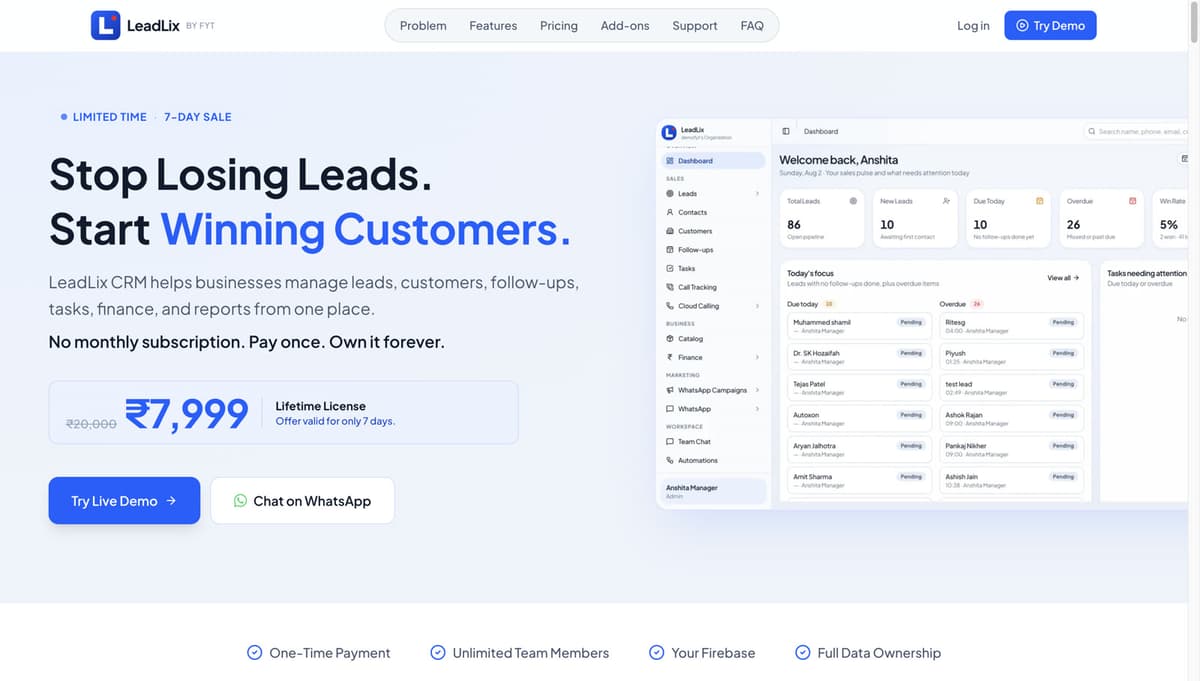
- LeadLix is our own sales CRM product. Instead of one shared app, we run a separate branded LeadLix instance for each customer business, each with its own data, users and settings, controlled by a licensing module. It has cloud calling (TeleCMI, Twilio), WhatsApp conversations, quotations and invoices, and a companion Android app. The core build took about 3 months of active development; a new customer deployment on top of it is much faster.
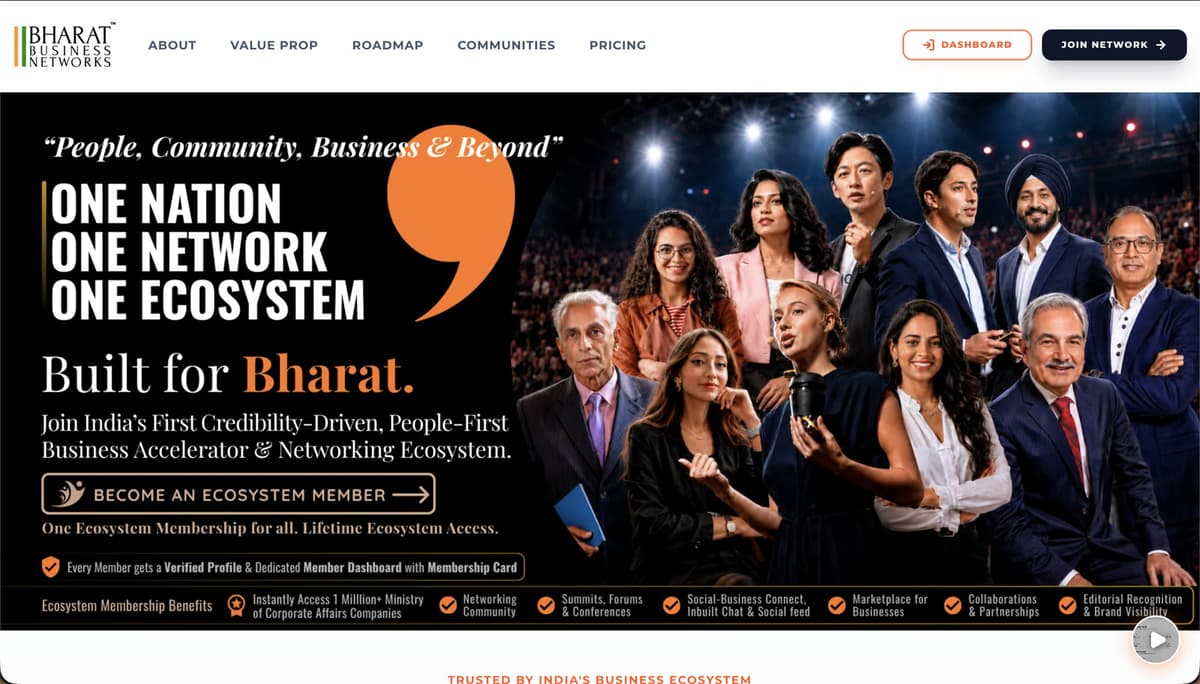
- Bharat Business Networks is a B2B directory and lead marketplace with Razorpay subscriptions and coupons, real-time chat and verified profiles. The first version, including backend, chat and subscriptions, was built in about 4 weeks.
- FYT CRM is the system we use to run our own sales and delivery, with granular role-based permissions, WhatsApp auto-reply, Gemini reply suggestions, invoices and a documented API. It also serves as the base for client CRMs.
Across services, we have delivered 35+ projects for 15+ clients across India. See all our case studies.
How long does SaaS development take?
- Single-workflow SaaS: 6–8 weeks
- Multi-tenant SaaS: 8–12 weeks
- SaaS platform with API, mobile or AI: 12–16 weeks
Every build follows the same steps: a scope call to fix the core workflow and the tenancy model, design and a clickable prototype, build sprints with regular demos, testing (including checks that one customer can never see another's data), then launch and handover with a roadmap for version 2.
How to keep your SaaS development cost down
- 01Prove the workflow first. Launch one core workflow to a few paying customers before building roles, integrations and a mobile app.
- 02Decide tenancy early. Switching from separate instances to a shared multi-tenant design later is expensive. Pick based on how many customers you expect and how much isolation they need.
- 03Use a managed backend for v1. Firebase or a managed PostgreSQL database removes a lot of server work in the first version.
- 04Use Razorpay subscriptions instead of custom billing. It covers plans, retries and mandates out of the box.
- 05Add integrations one at a time. Ship the one your customers ask for most, then add the next.
- 06Fix the scope before the build. A fixed scope with 40/40/20 milestone payments protects your budget from creeping changes.
FAQs
At Fly Your Tech, ₹2.5–4 lakh for a single-workflow SaaS, ₹4.5–8 lakh for a multi-tenant SaaS with roles, onboarding and GST invoices, and from ₹9 lakh for a larger platform, plus 18% GST.
An MVP proves one workflow with a small group of users (₹1.2–3.5 lakh with us). A full SaaS adds what many paying customers need at once: separate tenant data, subscriptions, roles, onboarding and integrations.
One application serves many customer accounts (tenants), and each tenant sees only its own users and data. The alternative is running a separate instance for each customer, which is how our LeadLix CRM works.
Yes. Hosting, database, payment-gateway fees, and WhatsApp, SMS or AI API usage are billed by those providers. Optional annual maintenance is 12–15% of the build cost per year.
Yes. After the final payment, you own the full codebase and the data.
Get a fixed-price SaaS estimate
Tell us the workflow your customers will pay for, how many customer accounts you expect, and the integrations you need. We'll suggest the right stage, tenancy model and timeline with a fixed-scope quote. See our MVP development services or contact us.